
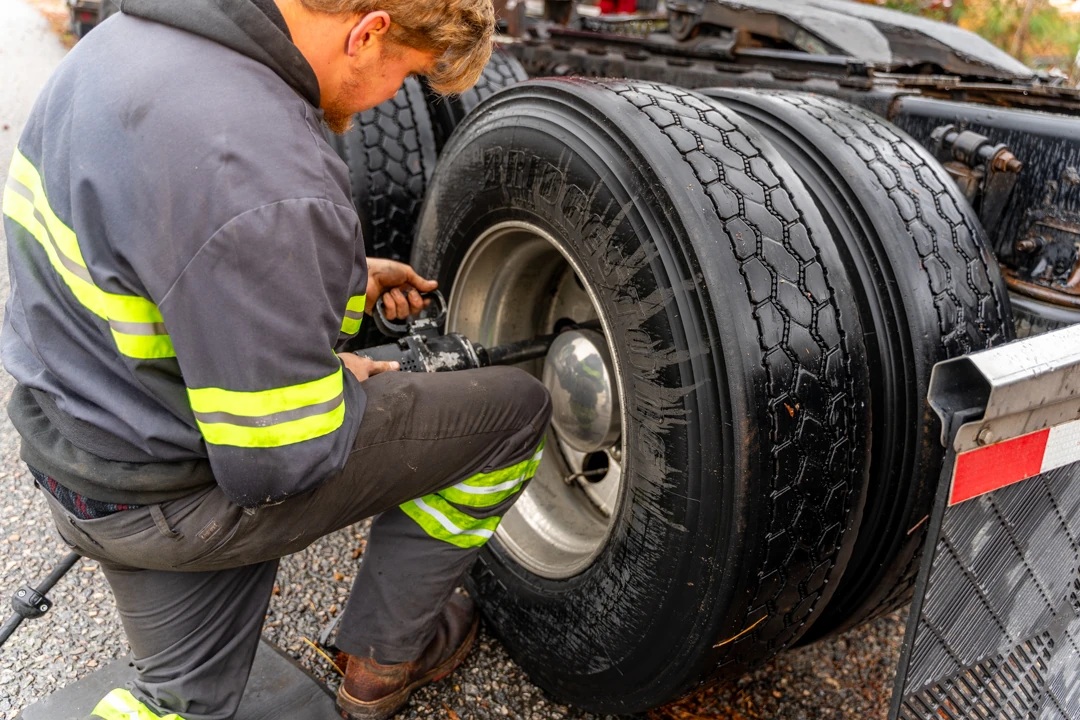
Most commercial fleet preventive maintenance (PM) programs fail.
It’s not because operators don't understand the value of preventive maintenance, but instead because the schedule exists in someone's head rather than on paper. For example, a truck gets an oil change when a driver complains about the engine. Or maybe brakes get looked at when a technician notices something during a roadside repair. Drivers or fleet maintenance personnel may check tire pressure if there’s downtime when a load gets delayed. This reactive pattern sets in gradually, and the costs show up on the balance sheet long before anyone connects them to the maintenance program that stopped running on schedule.
Structuring your preventive maintenance checklist by intervals (daily, weekly, monthly, annual) helps fleet operators break that cycle. The checklist doesn’t replace a qualified technician, but it creates the accountability framework that helps the right tasks get done at the right intervals before they become emergency repairs.
Why Preventive Maintenance Matters for Commercial Fleets
The math on preventive maintenance isn’t complicated. A scheduled oil change costs a fraction of a seized engine, and regular brake inspections cost less than a roadside emergency repair (plus the lost revenue from a truck sitting idle). Tire rotation and pressure management extend casing life and reduce blowout risk on a loaded vehicle doing highway miles.
Beyond direct repair costs, unplanned downtime carries secondary costs that are harder to measure but equally real: missed deliveries, customer service exposure, emergency dispatch fees, and the administrative overhead of scrambling to cover a truck that should otherwise be on the road. For fleets operating on thin margins across multiple vehicles, the cumulative effect of deferred maintenance adds up fast.
Regulatory compliance adds another layer. The FMCSA requires carriers to systematically inspect, repair, and maintain all commercial motor vehicles under 49 CFR 396.3. Documented preventive maintenance records aren’t optional. They are part of what an inspector looks at during a compliance review. A well-executed maintenance schedule supported by DuraFleet's preventative maintenance services keeps both the vehicles and the paperwork in order.
Daily Pre-Trip Inspection Checklist
Federal regulations under 49 CFR 396.13 require commercial drivers to be satisfied that the vehicle is in safe operating condition before each trip. A written pre-trip inspection report is required when defects are found. The daily inspection is the first line of defense in any PM program because it catches developing problems before they become roadside failures.
Daily pre-trip inspection items:
- Engine oil level
- Coolant level
- Power steering fluid level
- Windshield washer fluid level
- Fuel level and fuel system for visible leaks
- Tire condition and inflation (including spare)
- Brake function — check pedal feel and air pressure buildup
- Lights and reflectors (headlights, brake lights, turn signals, markers)
- Horn
- Mirrors — condition and adjustment
- Wipers and defrost
- Cab interior — seat belts, gauges, warning lights
- Cargo securement and load distribution
- Coupling devices on combination vehicles
Drivers should complete the pre-trip inspection before departure and report any defects in writing. Defects that affect safe operation must be repaired before the vehicle moves.
Weekly Maintenance Checklist
Weekly checks go a level deeper than the daily pre-trip, addressing fluid conditions and filter status that a driver-level walkaround doesn’t cover. These tasks are typically handled by a shop technician or a fleet maintenance coordinator with access to the vehicle's service history.
Weekly maintenance items:
- Engine oil condition: check for milky appearance or unusual smell indicating contamination
- Coolant condition: check concentration and look for signs of rust or foam
- Transmission fluid level and condition
- Brake fluid level
- Differential and axle fluid levels
- Air filter restriction indicator: service or replace as indicated
- Fuel filter water separator: drain water accumulation
- Battery terminals: check for corrosion and secure connections
- Belt and hose visual inspection: look for cracking, fraying, or soft spots
- Exhaust system visual check: leaks, loose hangers, unusual smoke
- Lubrication of grease fittings per OEM schedule
Consistent weekly attention to oil and fluid systems is one of the highest-leverage investments in long-term drivetrain health. Contaminated or degraded fluids are a leading cause of premature component failure across all heavy-duty diesel platforms.
Monthly Maintenance Checklist
Monthly inspections address the systems that wear gradually and are easy to defer when a truck is running without obvious symptoms. Brake systems, tires, and suspension components accumulate wear on every loaded mile. A monthly check interval catches degradation before it reaches a threshold that requires emergency repair.
Monthly maintenance items:
- Brake lining thickness and drum or rotor condition
- Brake adjustment: check stroke on air brake actuators
- Tire tread depth across all positions (including steer axle)
- Tire sidewall condition: cuts, bulges, weather cracking
- Wheel end inspection: check for hub oil leaks and loose fasteners
- Suspension component inspection: springs, shackles, bushings, shock absorbers
- Steering linkage and play: check for looseness or worn components
- Electrical system: test charging voltage, inspect wiring harnesses for chafing
- Lighting system functional test: all exterior lights
- HVAC system check: cab heat and A/C function
- Fire extinguisher inspection: pressure gauge and mounting
Brake system health warrants particular attention in this interval. The FMCSA places brake defects among the most common out-of-service violations found during roadside inspections. DuraFleet's brakes service addresses both inspection and repair needs for commercial vehicles across all axle configurations.
Annual Maintenance Checklist
Annual service is where the deeper, less frequent work gets scheduled. This includes Items that require the vehicle to be taken through a thorough inspection of every major system, not just the ones that run hot in daily operation. For most commercial carriers, the annual service interval also aligns with DOT inspection requirements and provides an opportunity to address accumulated wear items in a single coordinated service event.
Annual maintenance items:
- Full DOT-level inspection of all required systems (brakes, steering, suspension, lighting, coupling devices, tires, fuel system, exhaust)
- Engine tune-up per OEM specification: injectors, valve adjustment if applicable
- Coolant flush and system pressure test
- Transmission service: fluid drain and fill, filter replacement
- Differential and axle fluid change
- Power steering fluid flush
- Fuel system service: tank inspection, line inspection, injector cleaning
- Aftertreatment system inspection: DPF ash load assessment, EGR valve and cooler condition, SCR system function
- Turbocharger inspection: oil supply and return lines, shaft play
- Exhaust system full inspection: manifold, DPF, SCR, piping
- Chassis lubrication: all grease points per OEM schedule
- Fifth wheel inspection: jaw wear, locking mechanism, mounting
- Air dryer service: desiccant cartridge replacement
The annual aftertreatment inspection deserves dedicated attention in the scheduling framework. DPF ash load builds over time regardless of how well the active and passive regeneration cycles are performing, and a filter that has not been evaluated on an annual basis is a candidate for a failure that shuts the truck down at the worst possible moment. DuraFleet's general diesel truck maintenance and EGR and DPF services cover the full aftertreatment evaluation and any repair work identified during the annual review.
The DOT inspection should be scheduled as a discrete event within the annual service window rather than treated as a separate obligation. Bringing both tasks into a single coordinated mobile service visit minimizes the time the vehicle spends out of revenue service.
Turning Your Checklist Into a Fleet-Wide System
A checklist that lives on a clipboard in one truck does not constitute a fleet PM program. Scaling preventive maintenance across multiple vehicles requires three things: a consistent task framework (which the intervals above provide), a documentation system that records what was done and when, and a service partner capable of executing the work at the location where the fleet operates.
The documentation side is where most informal programs break down. If the only record of a brake inspection is a driver's recollection, it doesn’t exist from a compliance standpoint. Nor does it help a fleet manager plan the next service interval. Even a simple spreadsheet tracking each vehicle's PM events by date and mileage gives a fleet manager the visibility to identify which trucks are approaching service thresholds and to coordinate mobile service visits before a problem forces the issue.
DuraFleet's fleet maintenance model fits directly into this framework. Mobile technicians come to your yard or terminal, perform the scheduled work across multiple vehicles in a coordinated visit, and keep your trucks on their maintenance schedule without requiring you to move them off-site. DuraFleet can support the full range of maintenance intervals for fleet operators managing vehicles across several markets, including:
Ready to put a structured PM program in place for your fleet? Request service through DuraFleet's online form or find a location near your operation to connect with a mobile technician in your market.
Frequently Asked Questions
How often should a commercial truck get a full PM service?
Service intervals vary by OEM specification, vehicle age, load profile, and operating environment, but a practical working framework for most Class 6-8 commercial vehicles is quarterly engine oil and filter service, semi-annual brake and tire inspections, and a comprehensive annual review covering all major systems. High-mileage operations running triple-digit weekly distances may need compressed intervals on fluids and brake components. The OEM maintenance manual for the specific engine and chassis is the authoritative starting point for interval planning.
What is the most common cause of commercial vehicle breakdowns that preventive maintenance could prevent?
Brake system failures and tire-related incidents consistently rank as leading causes of commercial vehicle out-of-service conditions in FMCSA roadside inspection data. Both are maintenance-addressable. Brake lining wear is gradual and inspectable, and tire failures are frequently preceded by detectable pressure loss, tread wear, or sidewall damage. An honest monthly inspection that is acted on, rather than deferred, prevents the majority of these events.
Can DuraFleet handle PM services for mixed fleets with different makes and models?
DuraFleet's mobile technicians service a range of commercial vehicle makes including Kenworth, Mack, Peterbilt, Volvo, Freightliner, Isuzu, Hino, International, and Western Star. Mixed fleets with varying service intervals and OEM specifications can be scheduled through a single provider, which simplifies the coordination work for fleet managers overseeing multiple vehicle types under one operation.